I’ve lived with mental health struggles for most of my life. Some days it feels like a low hum in the background, easy to ignore, like white noise. Other days, it’s a full-body fog, a kind of heaviness that makes it hard to move, think, or even care. Depression, anxiety, burnout… the names shift, but the feeling? It’s familiar.
I’ve tried many things, therapy, exercise, nutrition, even medications when I needed them. And while I believe in getting support in all the ways we need, one of the most profound sources of healing for me has been in the soil, in the green things I grow, in the quiet work of tending a garden.
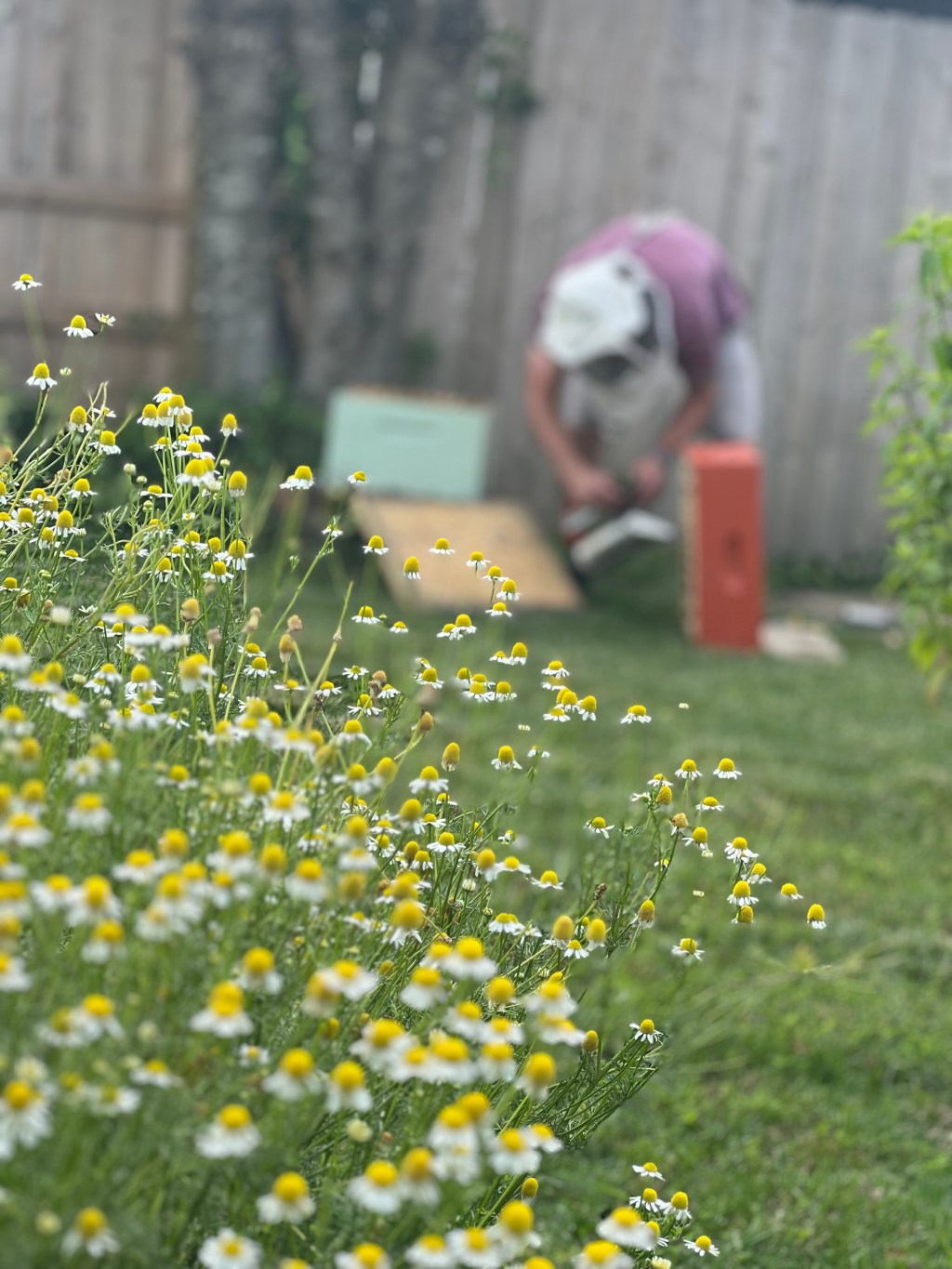
My garden is more than a place, it’s a practice. A living space where I don’t have to be productive or perfect. Just present. Some days, the most I can do is pull a few weeds or water the roots. Other days, I’m harvesting baskets of herbs under the sun, sweating, barefoot, smiling for the first time in days. There’s medicine in that.
I want to share three plants that have been central to my journey: St. John’s Wort, Skullcap, and Chamomile. These herbs are more than just remedies, they’re companions. Here’s how they support me:
St. John’s Wort – For the Days I Can’t Find the Light
This bright yellow flower has long been used for mild to moderate depression. I grow it in a sunny patch of my garden, where it seems to hum with energy. I make an infused oil with the flowers and also tincture the fresh plant in alcohol (it turns a rich ruby red, that’s how you know it’s potent).
St. John’s Wort reminds me that light can come from within. It’s not a quick fix, but over time, it lifts the edges of the dark like morning creeping through curtains. A note of caution: it interacts with many medications, so I always remind people to do their research or talk to an herbalist or doctor before using it internally.
Skullcap – For When My Nervous System Is Screaming
This herb doesn’t get enough love, in my opinion. Skullcap is my go-to when anxiety shows up as tension, racing thoughts, or when I feel like I can’t settle into my own skin. I grow it near the shadier parts of the garden. Its name sounds ominous, but it’s one of the most soothing herbs I know.
I use a tincture of fresh skullcap before bed or when I feel like I’m about to spiral. It’s helped me come down from panic, soothe sensory overwhelm, and fall asleep when I’ve been wired and fried. Skullcap is for those of us who live with our foot halfway on the gas pedal, who forget how to slow down until our bodies force us to.
Chamomile – For Grief, Gut, and Gentle Comfort
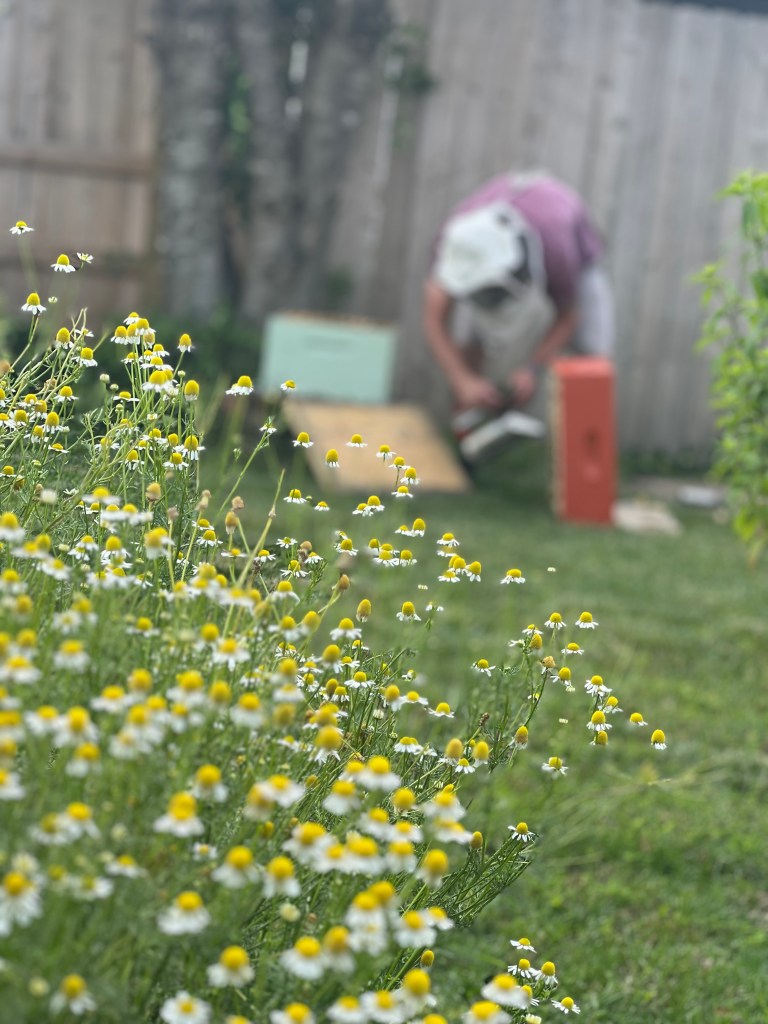
Chamomile is underestimated. People call it mild, but that’s its magic. Chamomile is for the inner child, the sleepless adult, the person with knots in their stomach and tension behind their eyes. I grow German chamomile in patches that self-seed every year.
I drink it as a tea most often, sometimes with honey, sometimes mixed with lemon balm or tulsi. Chamomile helps with digestion, emotional tension, and that kind of grief that sits just under the surface. When I’m fragile, I reach for chamomile. It doesn’t demand anything from me. It just is, calming, kind, and quietly powerful.
Growing Through It
There is no magic cure, no single herb that makes everything okay. But these plants, when grown with intention, when harvested and prepared with care, have helped me cope. More than that, they’ve helped me reconnect with myself.
Mental health isn’t linear. Some weeks I’m on fire with ideas, energy, and drive. Other weeks I’m just surviving. But tending to my garden reminds me that healing is cyclical. Plants die back. They rest. They return. So do we.
If you’re struggling, you’re not alone. And if you’ve never tried working with herbs, whether that means growing them, sipping tea, or just sitting beside them, I invite you to try. You don’t have to be an expert. You just have to be willing to listen.
Let this be your reminder: healing doesn’t have to look impressive. Sometimes it looks like a cup of tea, a patch of sunlight, or a few deep breaths in the garden.
From my hands and heart to yours,
Sami

 Tend & Thrive : Rooted Wellness
Leave a comment